KIGO Copper
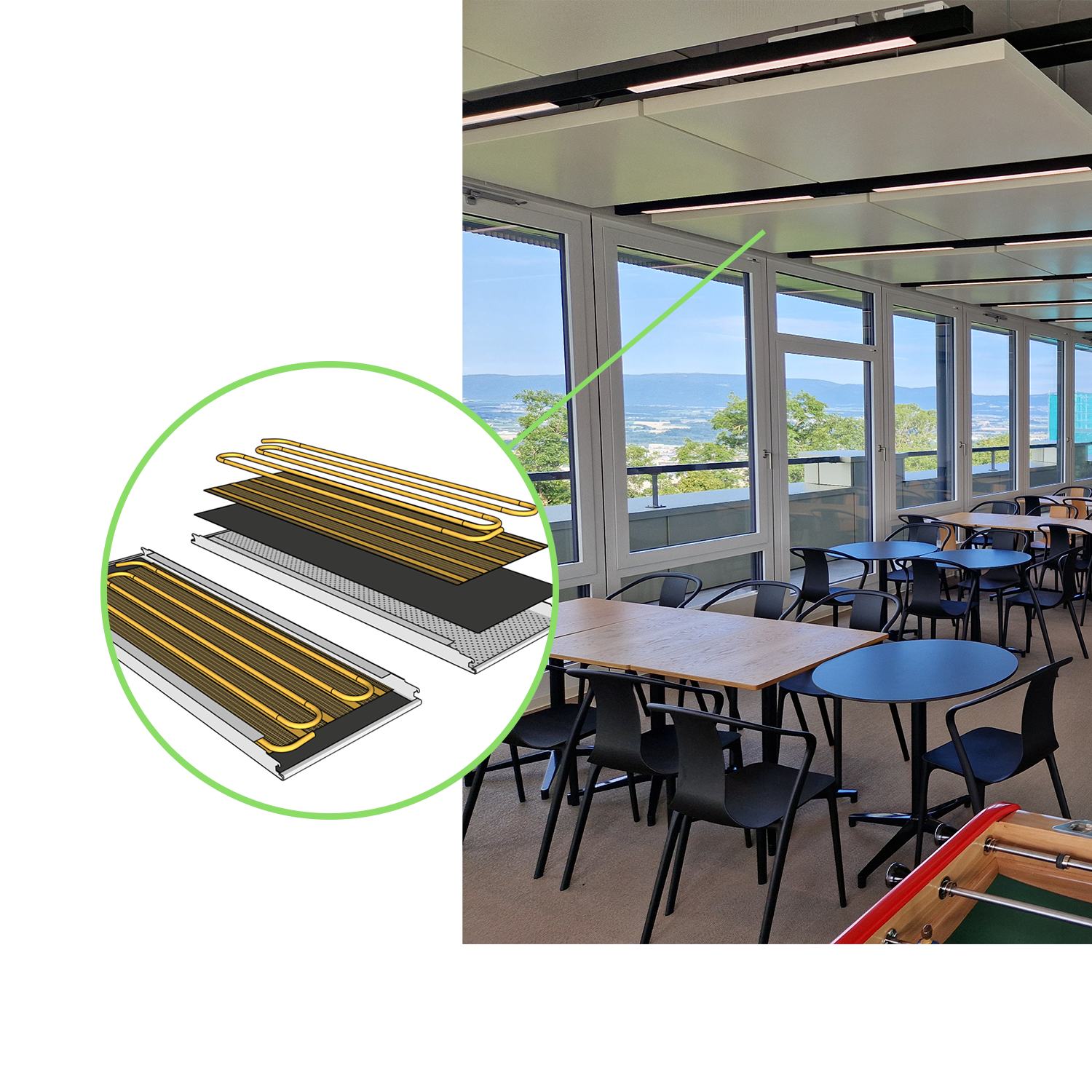

Heating and cooling sails
High reactivity: warmth or coolness can be felt immediately
Simple installation and integration of ventilation and light sources
Precision climate control with an accuracy of +/- 0.1 K possible
High-performance activation for metallic tiles
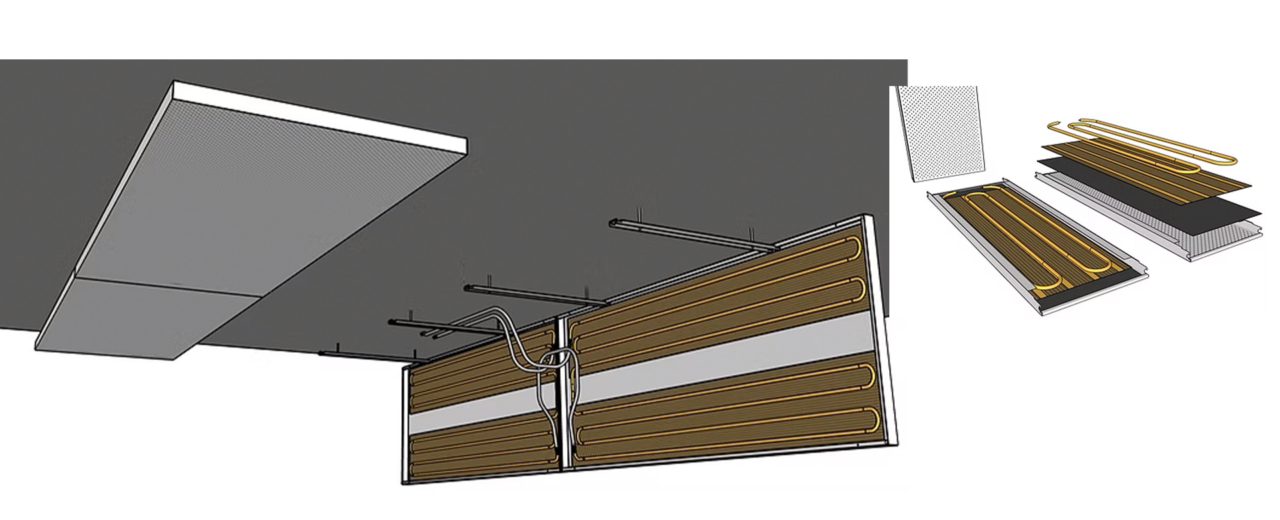
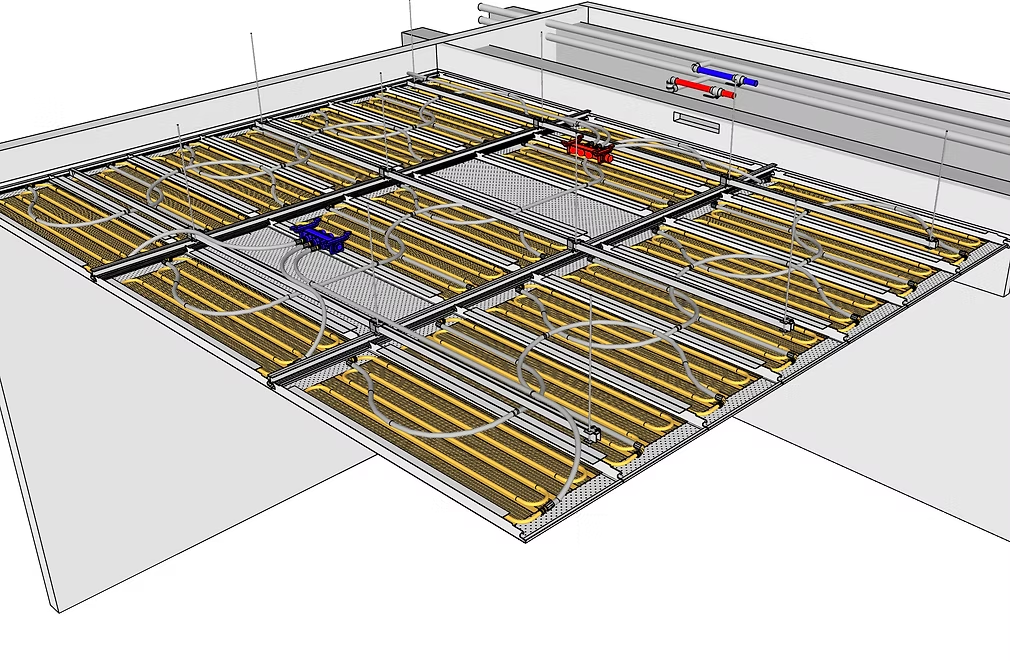
KIGO COPPER was developed specifically to be used with metallic ceiling tiles with the goal of providing efficient ceiling-based heating and cooling. Its patented design includes a rectangular perforated copper sheet (either 390 mm or 590 mm width). Above the non-perforated sections, a 12 mm diameter copper tube has been laser welded into place. The welded contact between the tube and the sheet provides optimal heat transfer. The minimum space between tubes is 80 mm. This manufacturing and welding technology has been used for many years in the glassed solar panel industry.
The patented geometry of the sheet means it remains perfectly flat after welding.
The KIGO COPPER heat exchanger is then fitted over the full surface of the metal tile, usually equipped with an acoustic fleece.
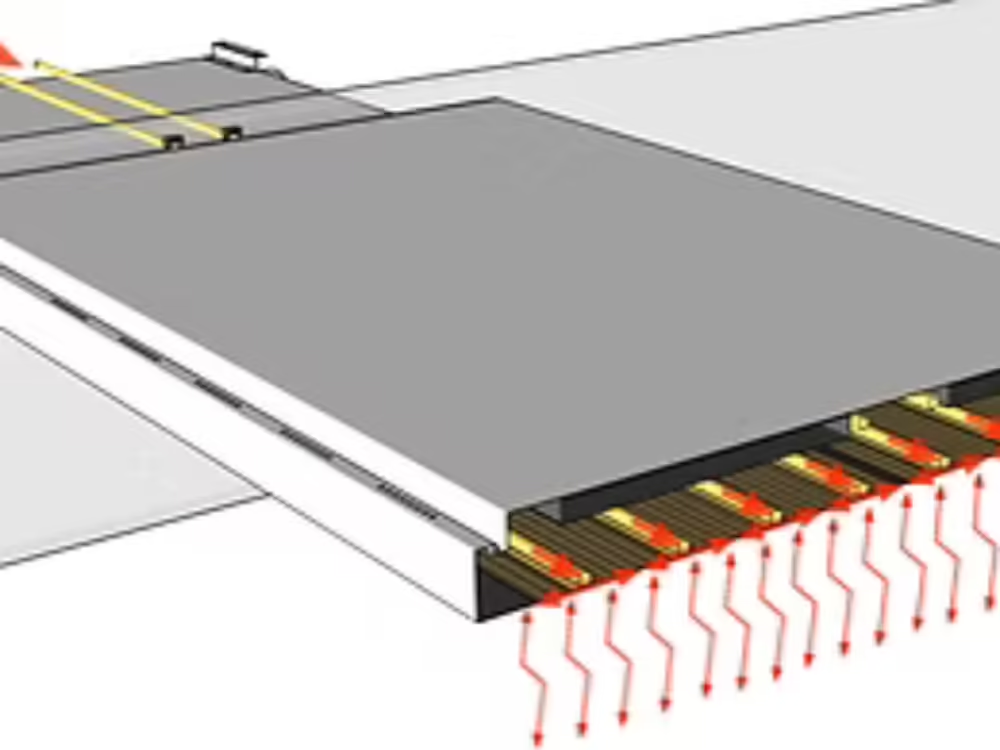
Given the excellent thermal conductivity of copper and the activated surface area, a « thermal highway » is created above the metallic tile. The resistance to heat transfer is therefore only affected by the thickness of the metal tile and by the acoustic fleece.
This optimized union between the fluid (which circulates through the copper tube) and the metal tile produces exceptional heating and cooling power while preserving high acoustic performance.
This can be further improved with the use of sound absorbing material on the tile.
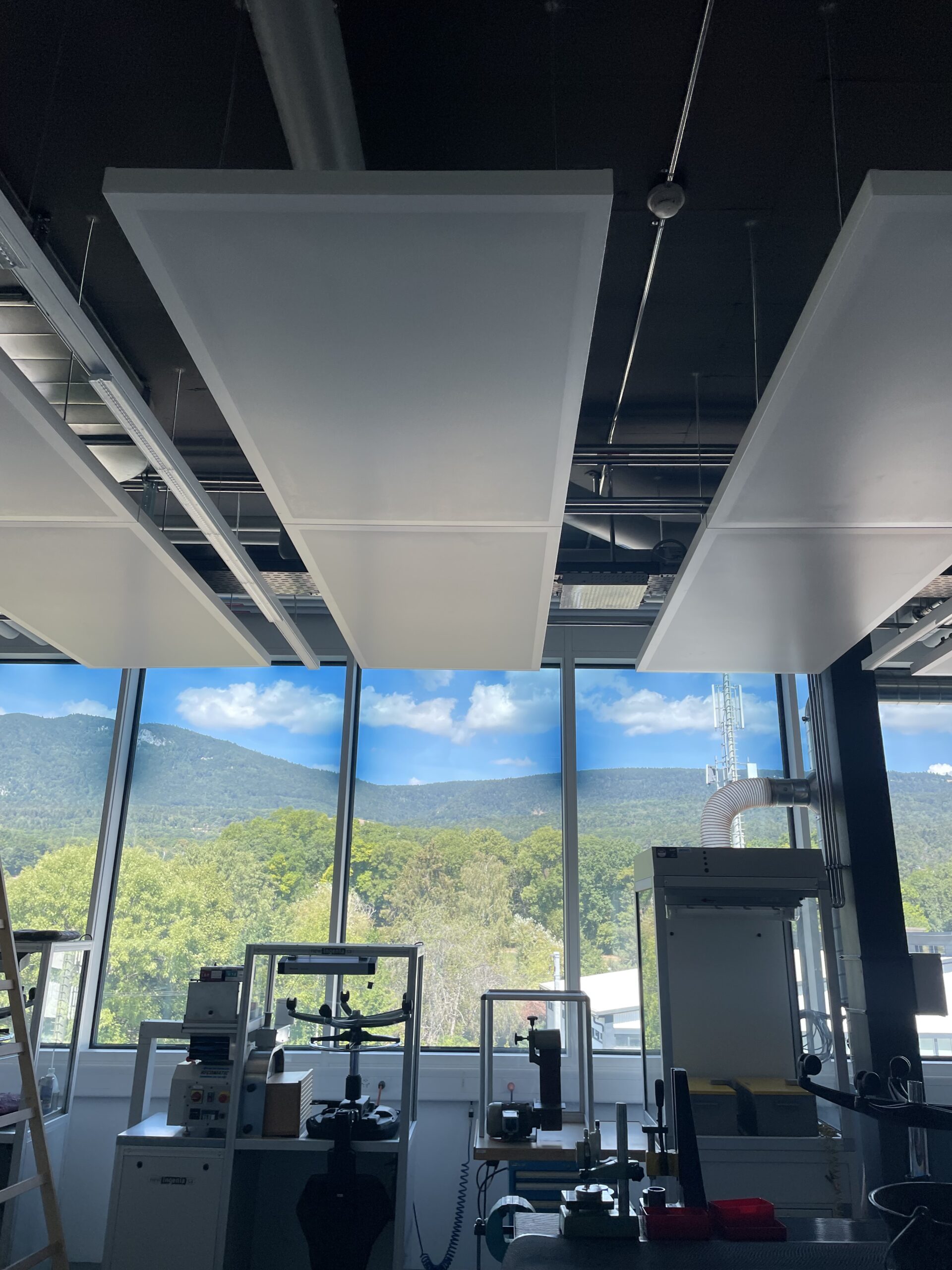
Standard island IKC
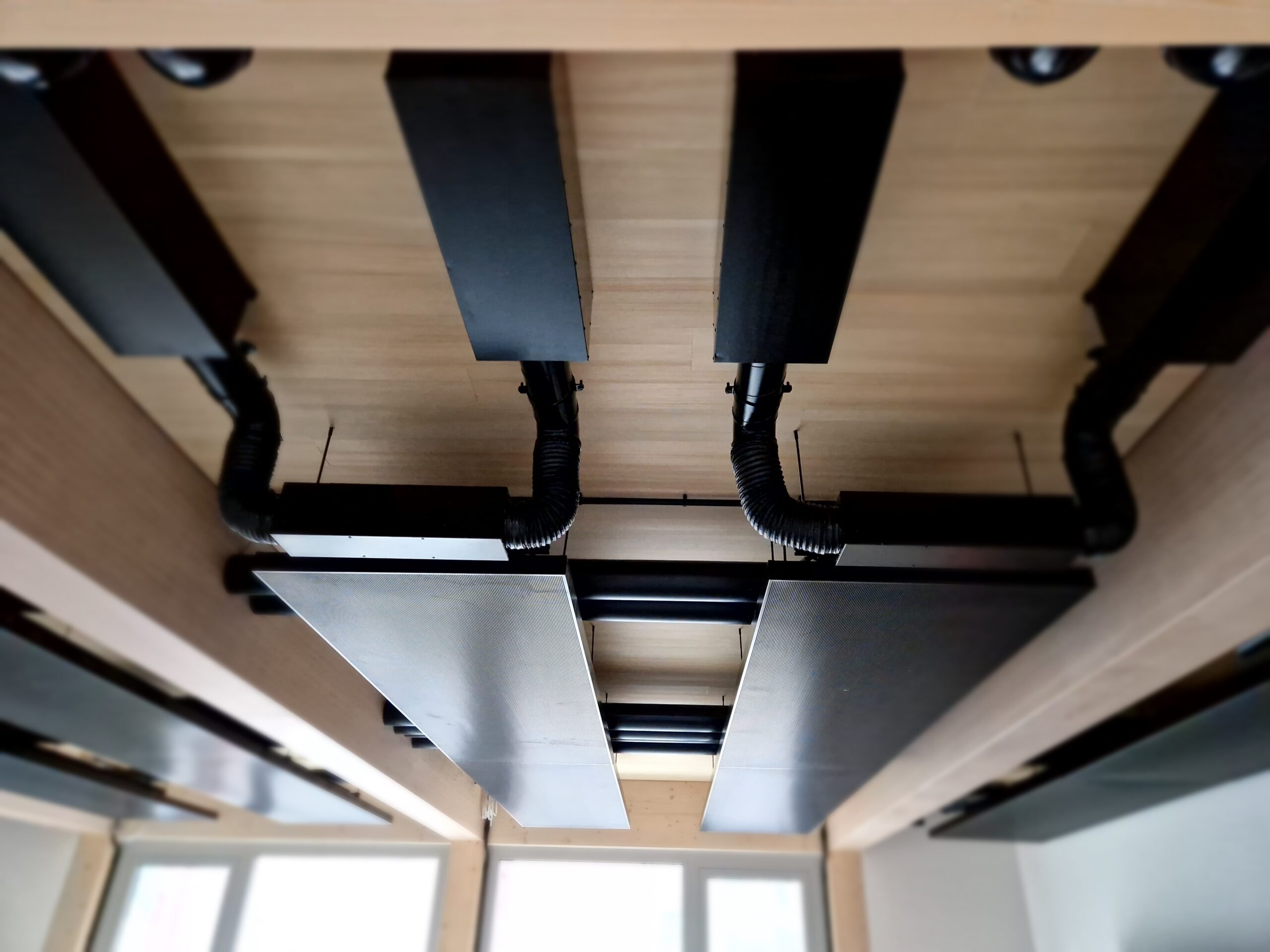
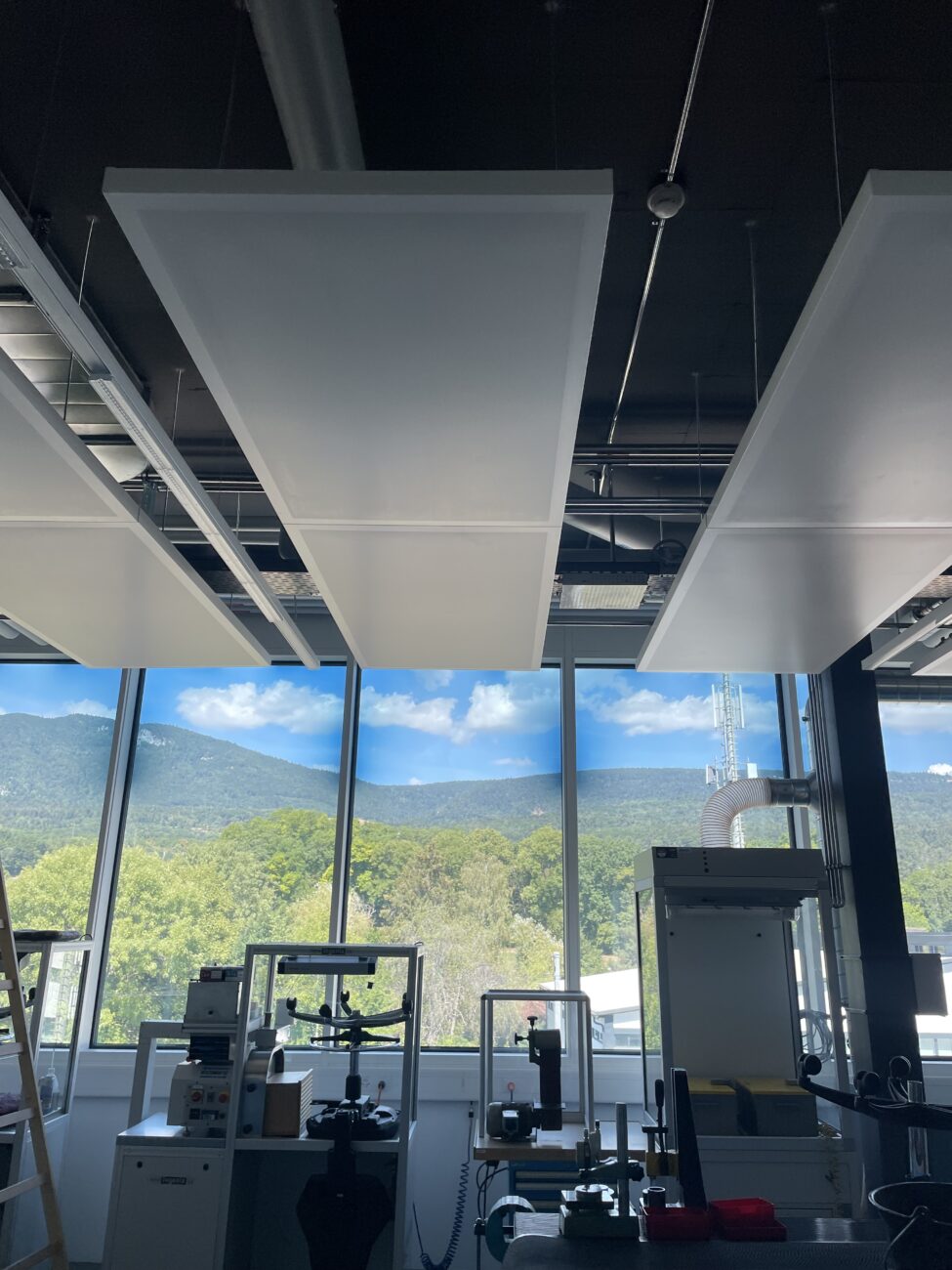
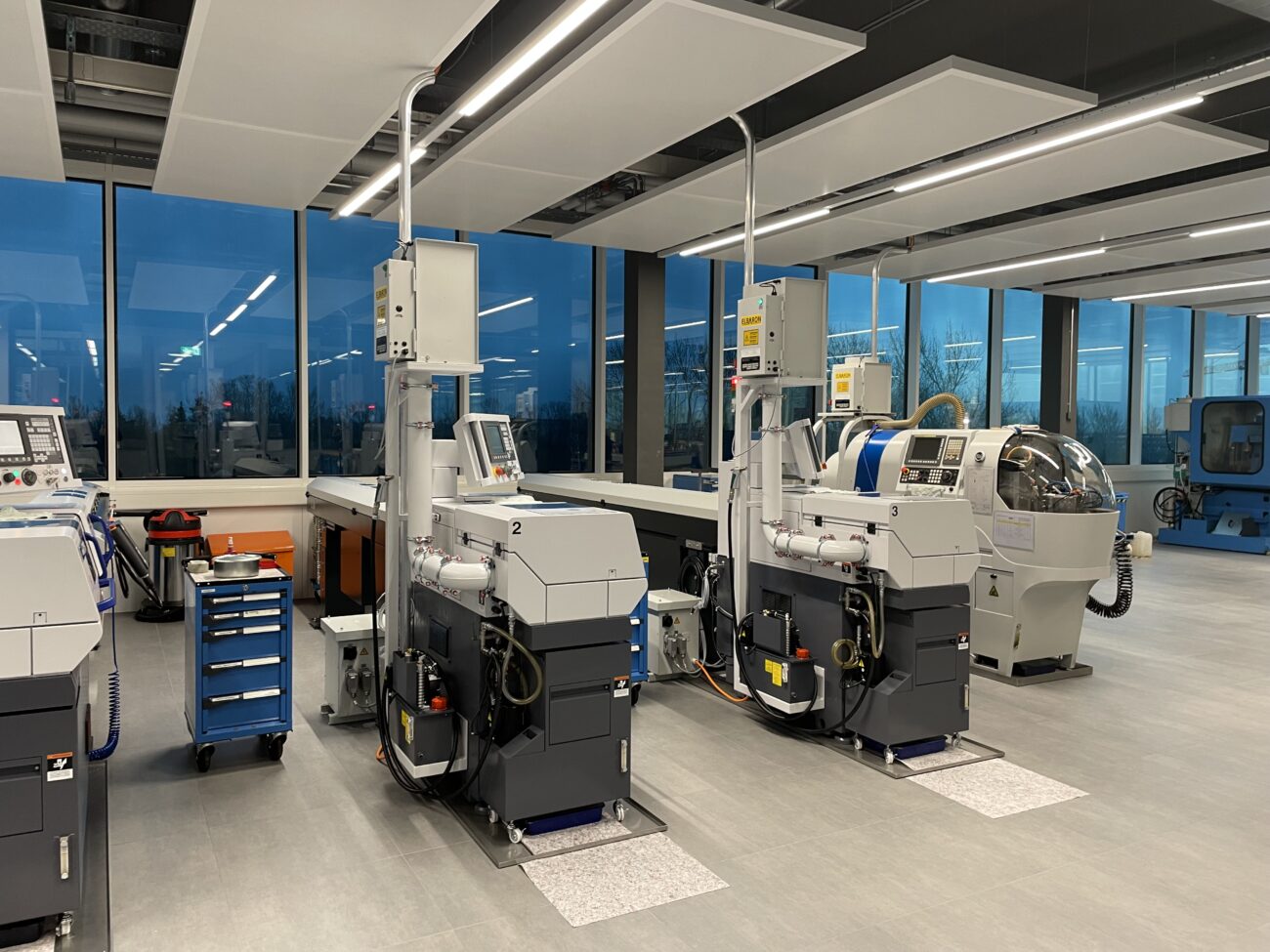
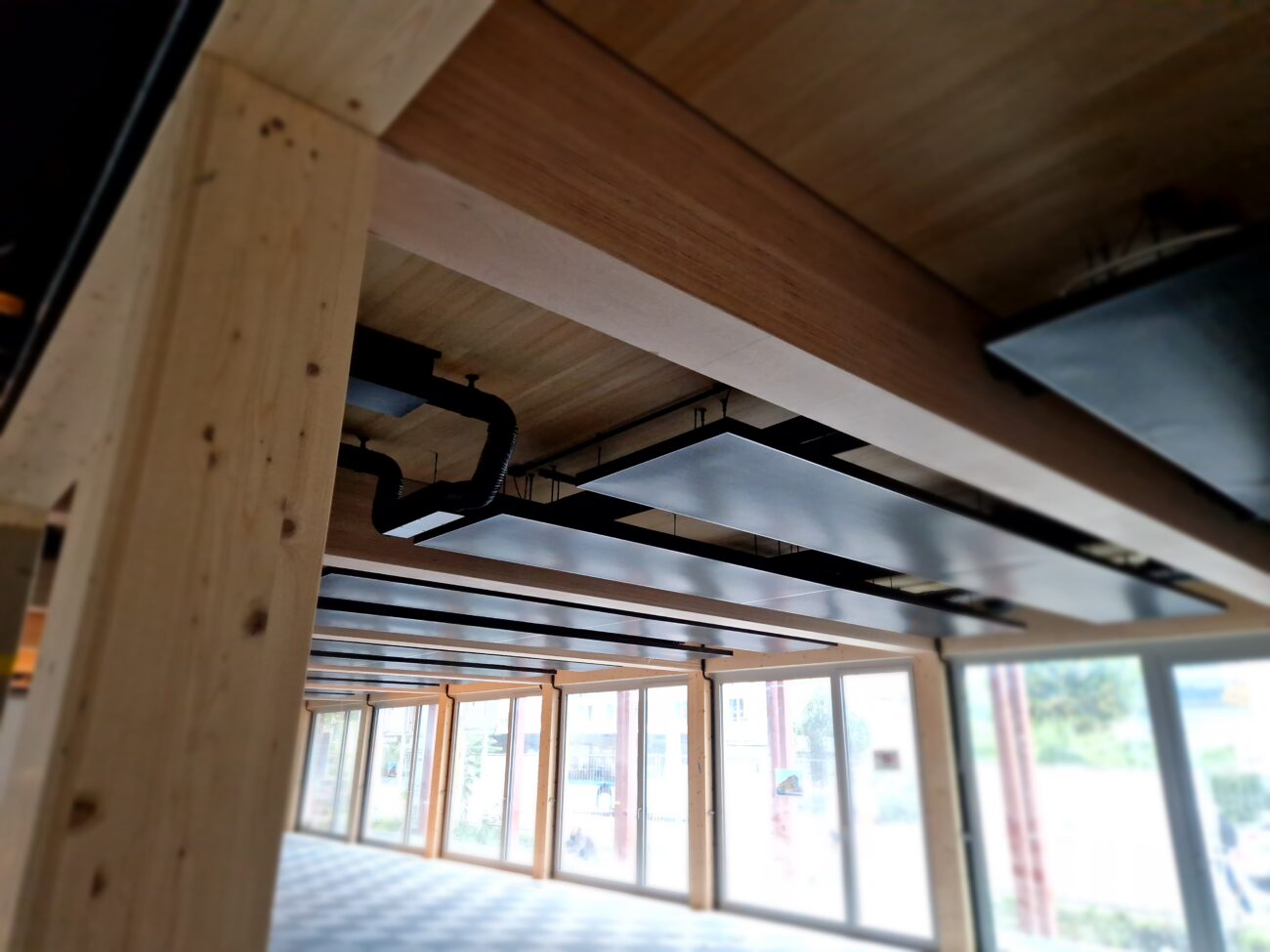
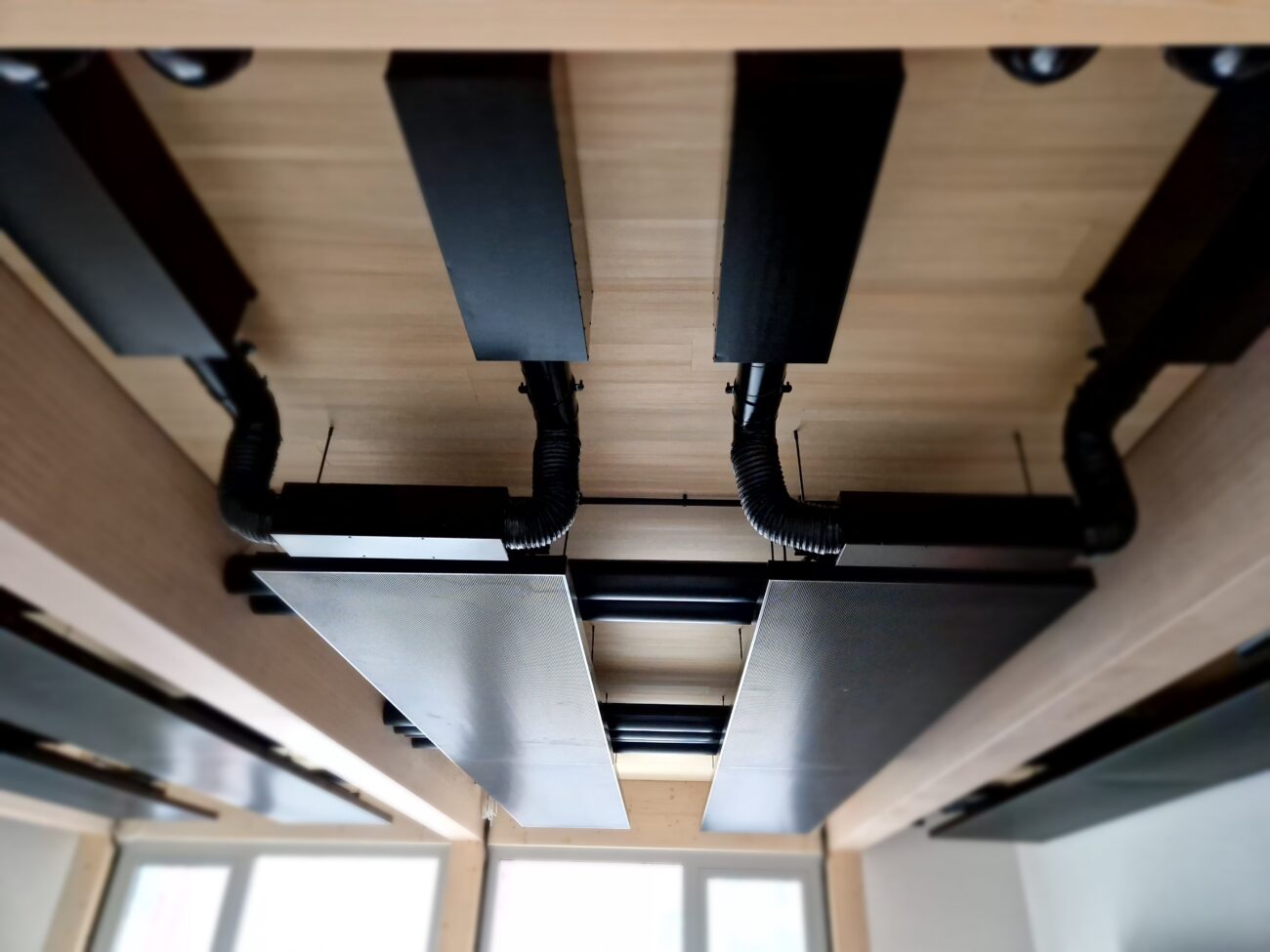
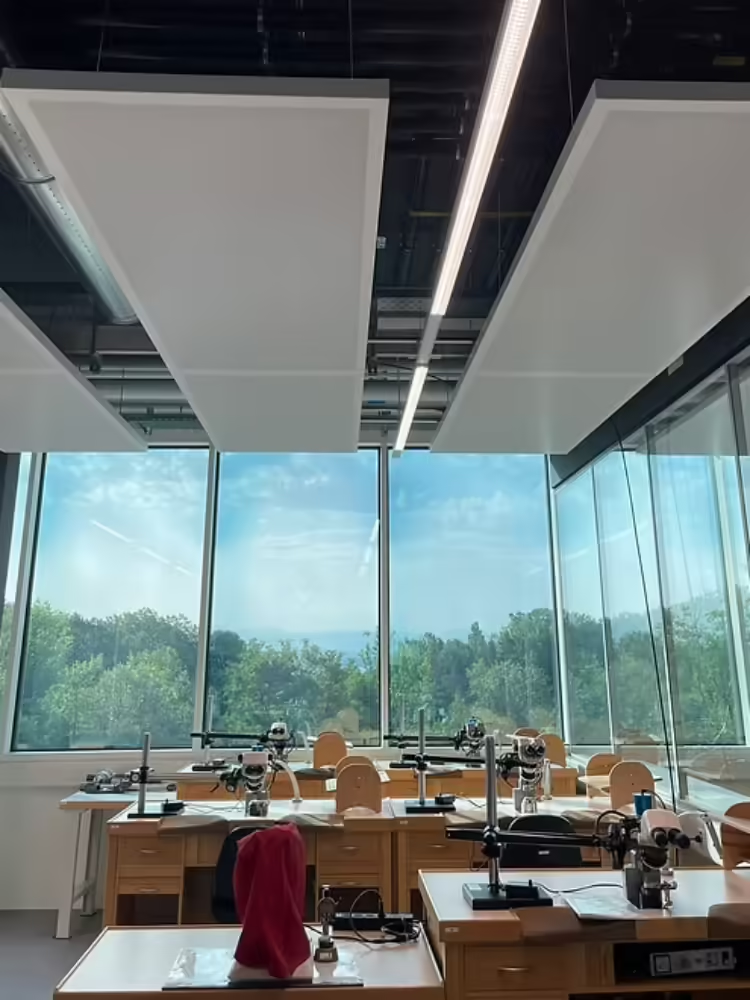
Independent ceiling sail (with ventilation boxes)
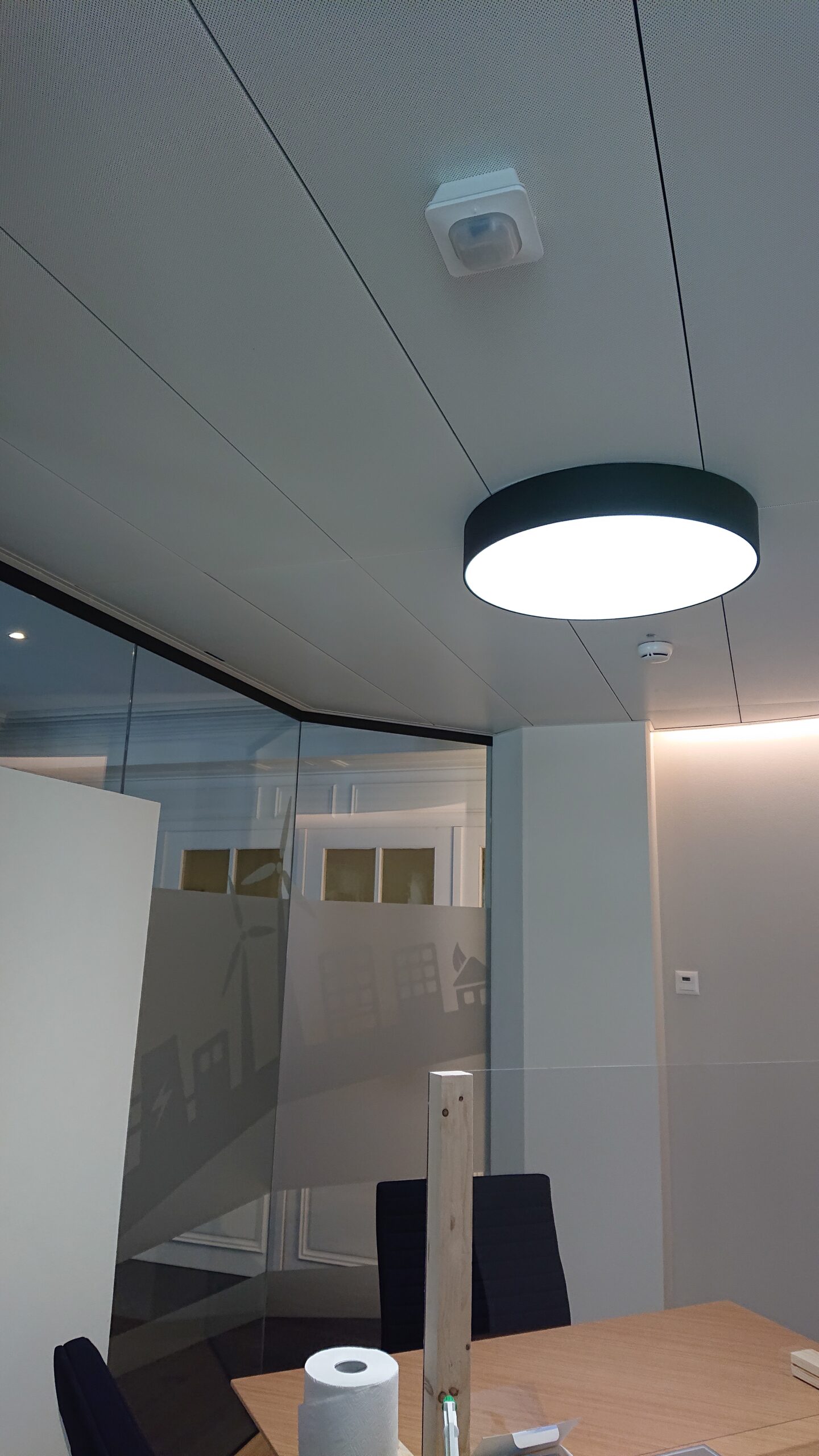
Closed suspended ceiling (FPF)
Standard island IKC
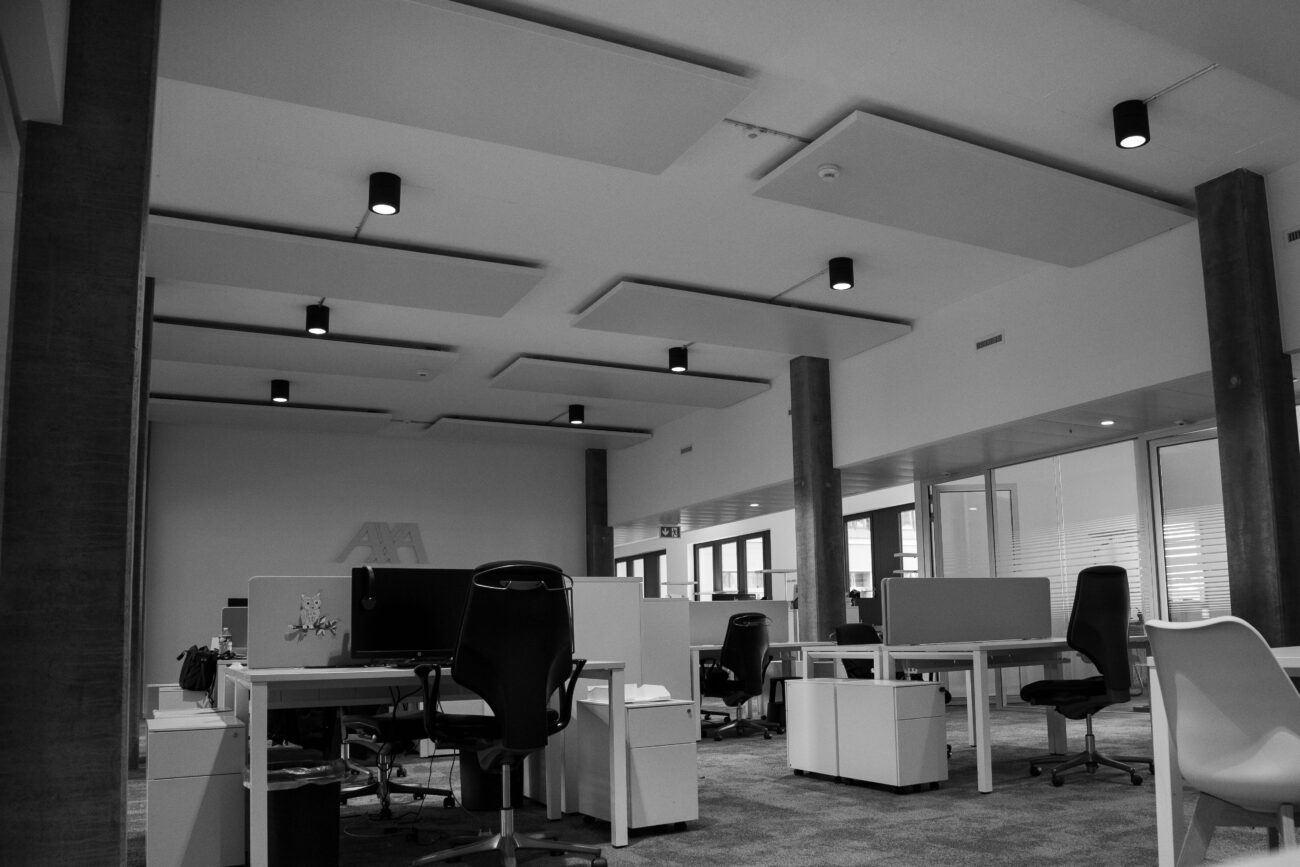
IKC is the “all-rounder” among the Kigo Copper products. It has a sleek appearance, is easy to install and offers an excellent compromise between power and acoustic performance thanks to its large absorption surface.
This type of island is suspended from the base plate using two crossbars and four threaded rods. The height of the fixing can be freely selected, but the minimum distance between the base plate and the top edge of the container must be at least 30 mm to allow the flexible ducts to pass through. The cross beams and the detailed rebates of the trays allow them to be unhinged and tilted without tools. The minimum width is 700 mm, then in steps of 100 mm up to a maximum width of 1100 mm.
Optional sound insulation made from a 20 mm thick recycled PET panel can be offered to improve sound absorption. It is glued into the tray against the activation.
Hybrid island IKCH
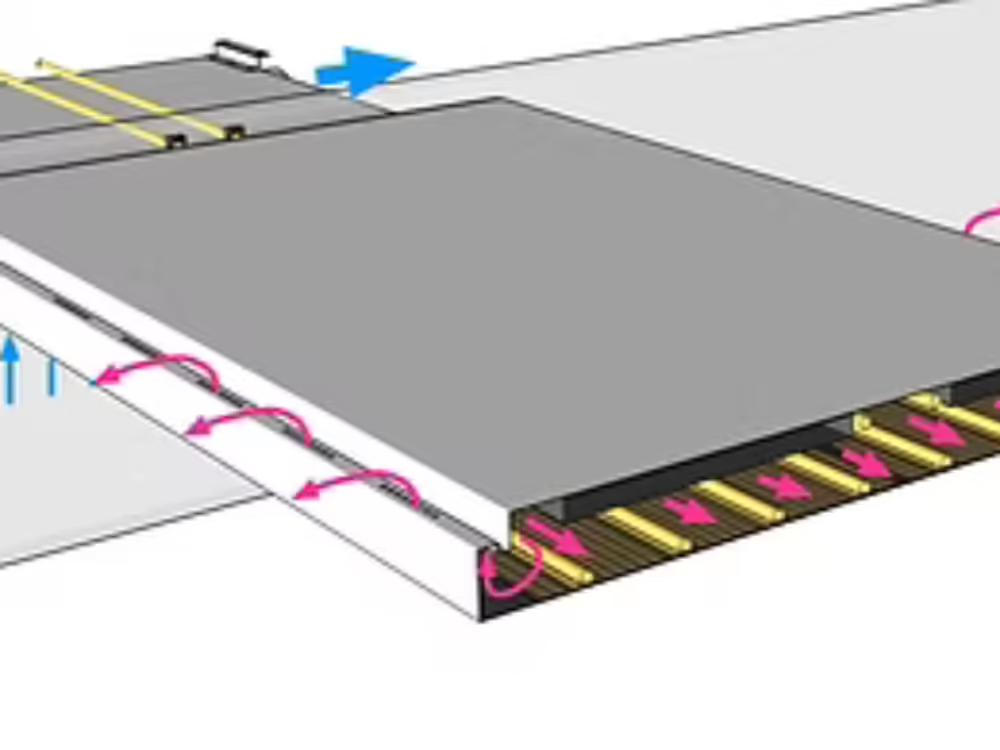
Integrating hygienic ventilation is also possible through an end cap box of 125 mm which is in general located in the technical corridor. A rectangular sheath delivers fresh air to the end of the ceiling sail. A grid then guarantees a good dynamic mixture with the local air, either in cooling or heating mode. The recirculation of the air is achieved through the use of another box above the ceiling sail (on the servicing side). This version requires a minimum spacing of 140 mm.
The island has a modular design and consists of one, two or a maximum of three metal containers. Up to a length of 2750 mm, the island consists of a single module. For longer lengths, it consists of several modules.
This hybrid island is intended for installation on the ceiling and near a rear wall or possibly a partition wall, behind which the distribution of the various media is located. It must be connected to the hydraulic network for heating and cooling, to the fresh supply air and optionally to the extract air.
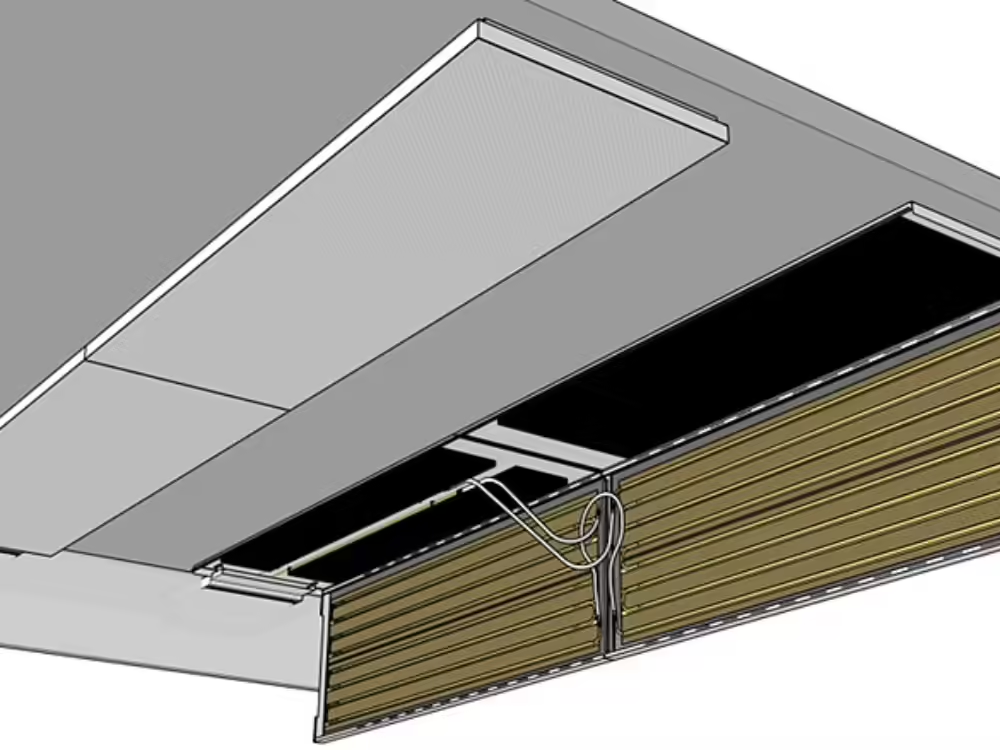
This version has a very low room height of approx. 85 mm. The three basic functions of the IKCH island: heating-cooling + hygienic ventilation + sound absorption
DOCUMENTS
Technical documentation and assembly instructions
Closed suspended ceiling KC-FPF
KIGO COPPER is available for all sorts of perforated metal tiles, whether Steel or Aluminum. The width must be a minimum of 400 mm. Depending on the details of each installation, it may be necessary to reduce the activation surface to allow for cutting or integration of additional components. The hydraulic inlets and outlets of the panels are connected together to form groups. For this quick connect couplings are used.
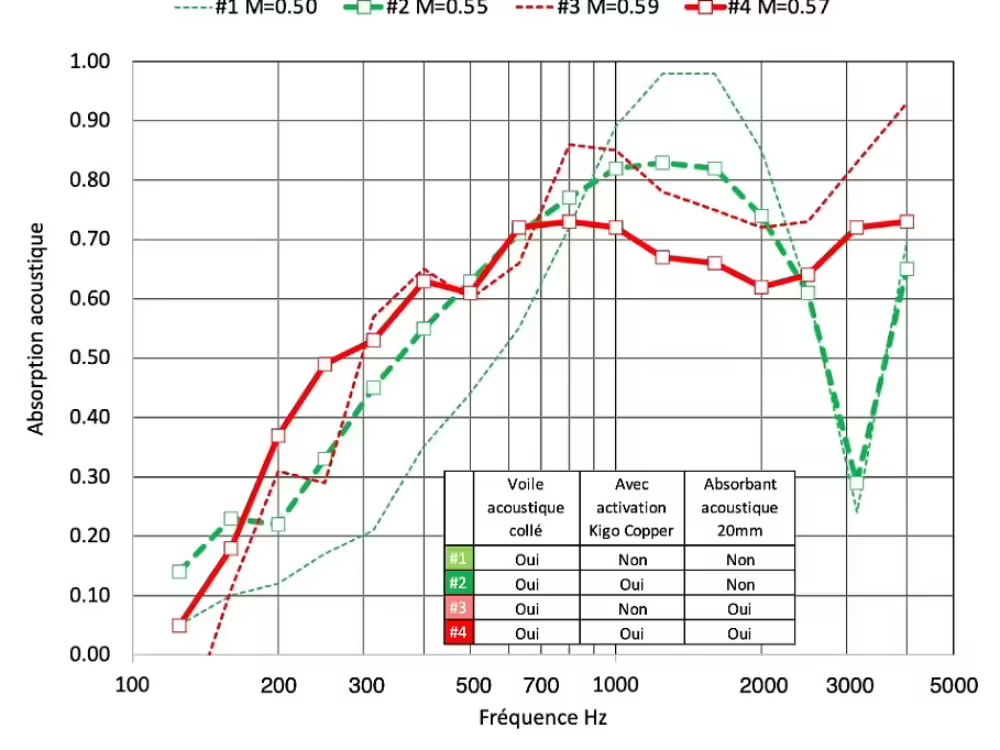
Acoustic performance
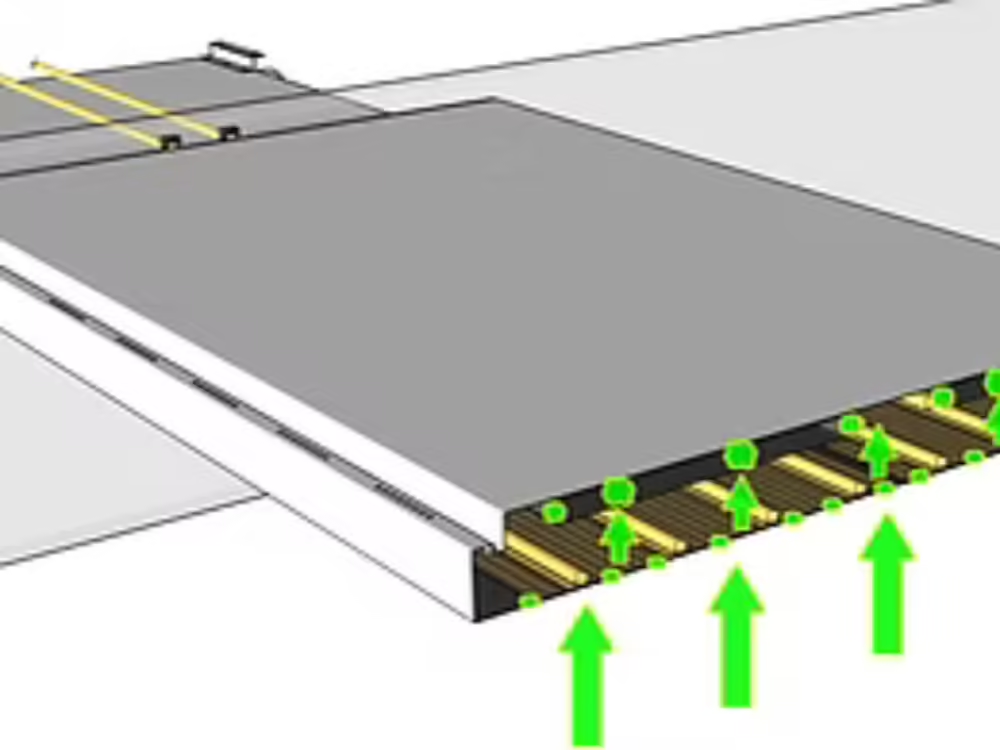
The acoustic performance of the activated tile is improved in lower frequencies.
The performance is still quite good for higher frequencies, specifically with added acoustic material.
This graph indicates the characteristics for a steel tile of 0.7 mm thickness with perforation of Ø 1.0 mm over 20%.
Independent ceiling sail
Unlike closed ceiling systems, it is unwise to use absorption values for ceiling sails. Thanks to the additional absorbent surface on the back of the panel, the ceiling sail provides on paper excellent acoustic results (for example, aw = 1.6), which are not very useful for calculations. In addition, the diffraction of the edges and the circumference / surface area ratio of the ceiling sail also have a certain influence (which is not directly determinable). Therefor ceiling sails have better acoustic absorption than closed ceilings.
Hence, for ceiling sails it is preferable to use equivalent surface absorption values instead of absorption coefficients; this suggests that you can determine how many m2 of ceiling is replaced by the ceiling sail to obtain the same acoustic result.
Complete suspended ceiling
In the case of complete ceilings, the acoustic performance values supplied by tile manufacturers are typically sufficient indication.